Comprehensive Environmental Testing and Analytical Services
-
Testing volatile compounds and airborne particulates to protect worker health, ensure community air quality, and evaluate indoor environmental hazards.
Vapor Intrusion Studies: Soil gas and sub-slab testing to evaluate whether volatile organic chemicals from underlying groundwater or soil contamination are migrating into indoor spaces.
Ambient Air & Industrial Stack Testing: Monitoring outdoor air quality and industrial emissions for Volatile Organic Compounds (VOCs), Hazardous Air Pollutants (HAPs), particulate matter, sulfur dioxide, and nitrogen oxides.
Hazardous Materials & Building Health: Specialized screening for indoor environmental safety, including airborne mold/spore identification, regulated asbestos hazard evaluations, and lead-based paint analysis prior to building renovation or demolition.
-
Soil and solid matrices require precise extraction and preparation techniques to assess contamination, evaluate site safety, and dictate proper remediation or disposal strategies.
Hazardous Waste Characterization (TCLP): Utilizing EPA SW-846 method 1311 (TCLP) leaching procedures to classify solid waste, industrial sludge, and soil for proper transport and disposal.
Petroleum Hydrocarbon Profiling (TPH): Analyzing fuel releases from underground tanks and industrial spills for Gasoline/Diesel Range Organics (GRO/DRO), BTEX compounds, and PAHs.
Environmental Site Assessments (Phase I & II ESAs): Screening baseline soil quality for real estate developers and engineers to identify legacy pesticides, heavy metals, and industrial residues.
Sediment & Marine Solids: Testing harbor, riverbed, and wetland sediments prior to dredging to assess bioaccumulation risks and persistent organic pollutants.
-
Water quality impacts public health, industrial operations, and delicate ecosystems. Our full-service environmental analytics laboratory provides comprehensive testing across all aqueous environments to ensure safety and regulatory compliance.
Drinking Water Compliance (SDWA): Testing public water systems and private wells for heavy metals, volatile organic compounds (VOCs), nitrates, microbial pathogens (E. coli), and disinfection byproducts to meet Safe Drinking Water Act standards.
Wastewater & Industrial Effluent (CWA/NPDES): Discharge monitoring for municipalities and industrial facilities under NPDES permits, including BOD, COD, Total Suspended Solids (TSS), nutrients, and heavy metals.
Groundwater & Monitoring Wells: Critical testing for landfill monitoring, site assessments, and leak detection, focusing on organic solvents, dissolved metals, and chemical plume migration.
Surface Water & Stormwater: Ecological monitoring for lakes, rivers, and runoff to quantify nutrient loading, turbidity, pesticide runoff, and aquatic health indicators.
-
Per- and polyfluoroalkyl substances (PFAS)—often referred to as "forever chemicals"—present one of the most complex environmental and public health challenges today. Due to their extreme chemical stability, detecting these synthetic compounds requires ultra-trace precision and specialized laboratory protocols.
Drinking Water & Public Health Compliance: Quantitative analysis of drinking water supplies using validated EPA methods (e.g., EPA Method 537.1 and Method 533) to ensure compliance with federal Maximum Contaminant Levels (MCLs) and state-specific monitoring mandates down to single-digit parts per trillion (ppt).
Wastewater & Industrial Effluent Profiling: Utilizing EPA Method 1633—the flagship multi-matrix method—to identify and quantify target PFAS analytes in industrial discharges, municipal wastewater influent/effluent, and landfill leachate.
Soil, Biosolid, & Sediment Matrices: Comprehensive screening of solid matrices to evaluate site contamination, historical spill footprints, land application of biosolids, and potential leaching risks using isotope dilution techniques.
Biological Tissue & Ecotoxicology: Specialized extraction and mass spectrometry analysis of tissue samples (e.g., fish, crops, wildlife) to evaluate PFAS bioaccumulation within food webs and assess ecological health risks.
-
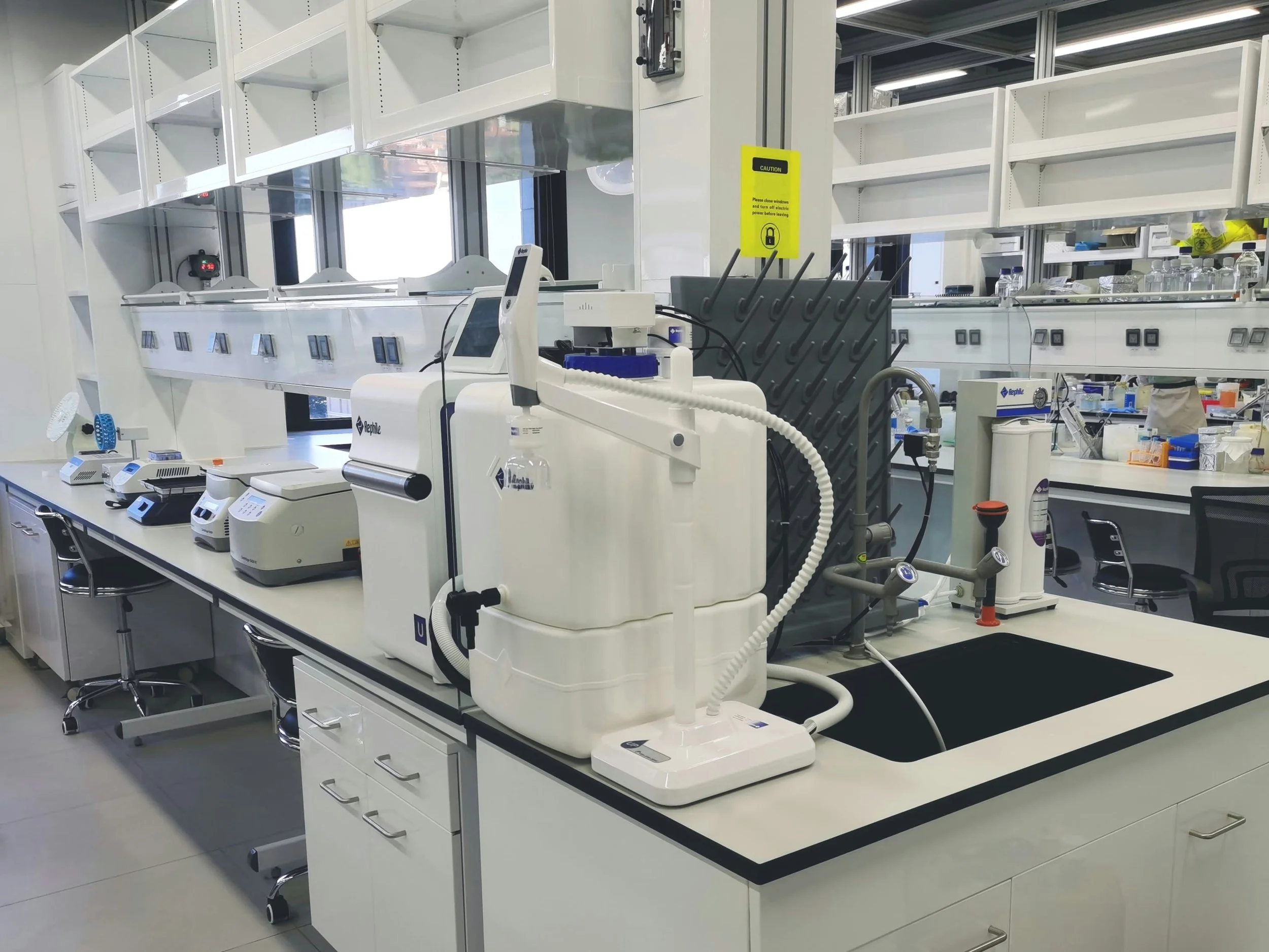
From sample intake to final data delivery, we manage the complete lifecycle of your analytical program to ensure sample integrity, regulatory compliance, and seamless project execution.
Turnkey Project Management: Dedicated project managers serve as a single point of contact to coordinate testing, monitor holding times, manage data deliverables, and streamline regulatory reporting.
Courier & Sample Logistics: Reliable, temperature-controlled chain-of-custody transport using specialized cooler kits and dedicated courier routes to guarantee samples arrive safely and within regulatory holding windows.
Logistical & Technical Support: Dedicated assistance with sampling protocols, container selection, and Chain of Custody preparation to ensure your submitted samples meet all quality control standards before entering the lab.
-
Asbestos has been found in a wide range of building materials, including:
Pipe and boiler insulation
Vinyl floor tile and the adhesive beneath it
Sheet flooring and flooring backing
Joint compound and plaster
Textured ceilings
Ceiling tiles
Roofing and siding materials
Cement board and cement pipe
Caulk and other sealants
From routine compliance monitoring to specialized contamination profiling, we deliver legally defensible data across all environmental matrices.



Fast TAT
We optimize lab workflows to deliver reliable data quickly, helping you meet tight project deadlines and regulatory filings without delay.
Our Values

In-person Local Support
We provide accessible, hands-on customer service. Whether you need help interpreting a water test or navigating local regulations, our team is a call away.

Defensible Science
Every test is backed by certified EPA methodologies and rigorous quality control to ensure your data is defensible and error-free.
Community First
Our work is driven by a commitment to safeguarding natural resources, public health, and local ecosystems for the long term.