
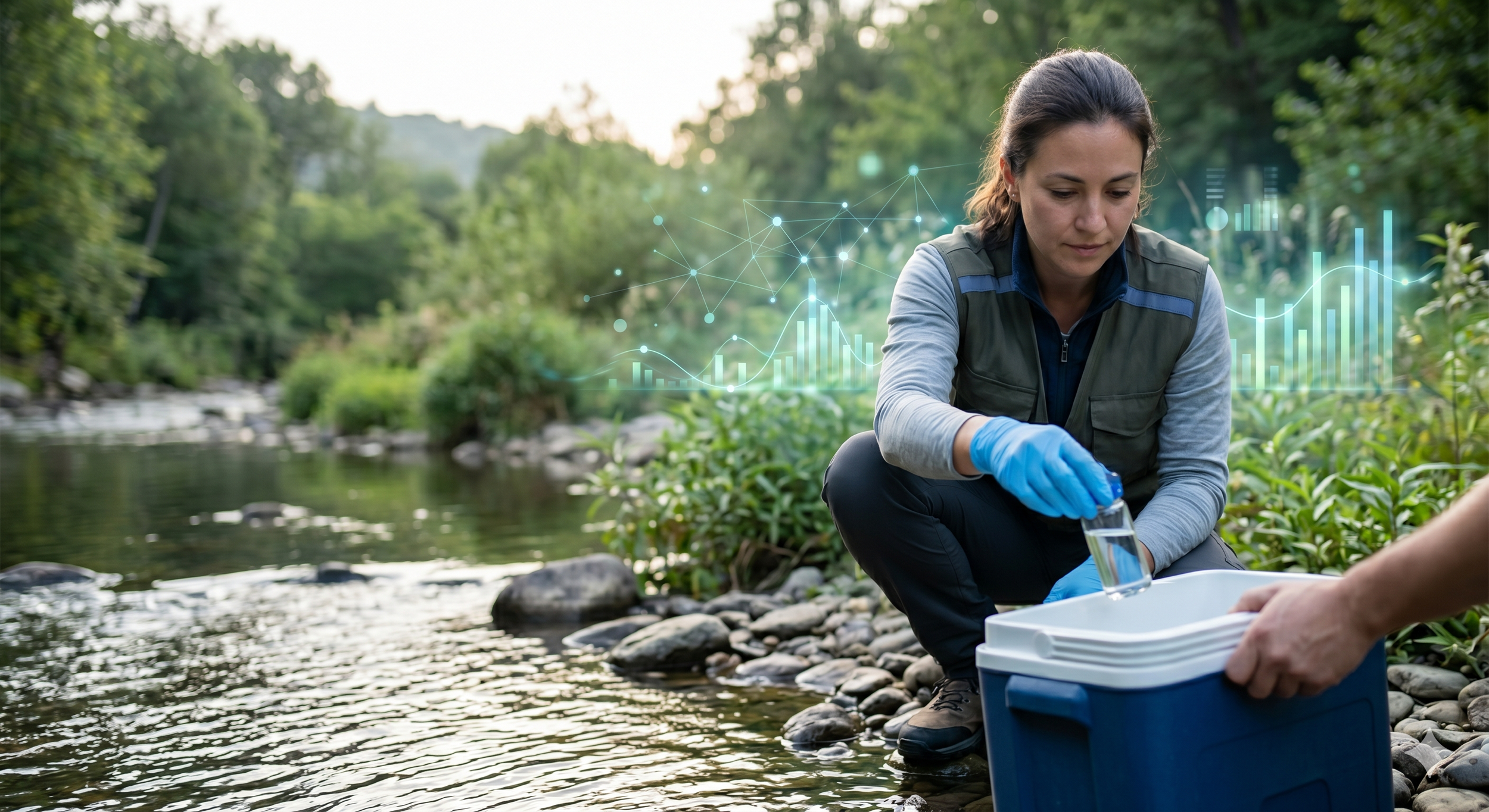
Data-driven environmental solutions
Providing comprehensive environmental analysis for business, research, and public health.
Legally defensible data across all environmental matrices
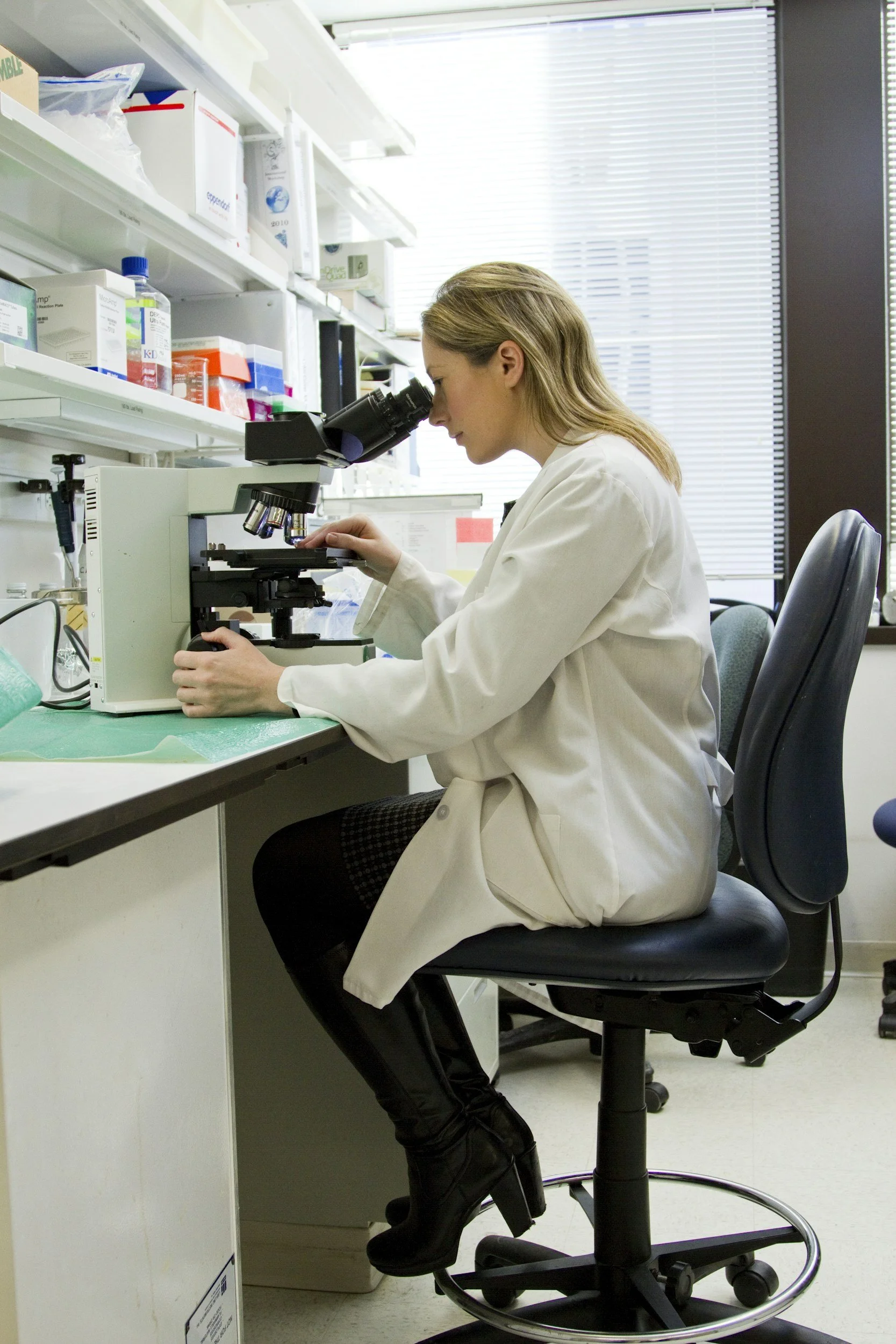
Our laboratory is equipped to analyze physical, chemical, and biological properties of natural and industrial samples by providing precise, defensible data about the quality of our surrounding environment. Using advanced analytical instrumentation, we examine a wide array of samples matrices, including surface water, drinking water, wastewater, soil, sediment, air, petroleum products, and biological tissue.
Our primary function is to identify and quantify potential pollutants, hazardous compounds, and ecological health indicators. We support complete project lifecycles, providing field sampling services, rigorous chain-of-custody tracking, fast turnaround time with in-person local support, and custom data reporting tailored to complex regulatory frameworks.
From municipal water authorities and state environmental agencies to engineering firms, academic researchers, and individual property owners, we empower decision-makers to safeguard public health, ensure legal compliance, and protect natural ecosystems by translating complex physical samples into actionable data. Every test method we perform follows standardized protocol developed by regulatory bodies to ensure results are accurate, reproducible, and legally sound.
Our Values
Fast TAT
We optimize lab workflows to deliver reliable data quickly, helping you meet tight project deadlines and regulatory filings without delay.

In-person Local Support
We provide accessible, hands-on customer service. Whether you need help interpreting a water test or navigating local regulations, our team is a call away.

Defensible Science
Every test is backed by certified EPA methodologies and rigorous quality control to ensure your data is defensible and error-free.
Community First
Our work is driven by a commitment to safeguarding natural resources, public health, and local ecosystems for the long term.

Frequently Asked Questions
Still have questions? Take a look at the FAQ or reach out anytime.
-
A Chain of Custody (COC) is a legal document that tracks a sample from the moment of collection through transport, testing, and eventual disposal. It records details such as the sample ID, collection date and time, sampler name, requested analyses, and signatures for every transfer of ownership. This documentation guarantees sample integrity and ensures that the final analytical results are defensible in regulatory or legal proceedings.
-
Standard turnaround time for environmental samples typically ranges from 5 to 7 business days, depending on the complexity of the requested analysis. However, most accredited laboratories offer expedited "rush" processing—such as 24-hour, 48-hour, or 3-day turnarounds—for urgent situations. Rush services usually require prior lab approval and incur additional surcharges.
-
Proper collection requires specialized containers—often pre-treated with chemical preservatives—provided directly by the testing facility. Most aqueous and solid samples must be stored at temperature-controlled conditions (typically on ice around 4C) to prevent volatile compounds or biological targets from degrading before testing. Delivering samples promptly ensures they arrive well within regulatory holding times.
-
Sample holding time is the maximum allowable time between sample collection and laboratory analysis during which the sample remains scientifically valid. Certain parameters, such as pH or dissolved oxygen, must be tested almost immediately, whereas organic compounds may have a holding time of up to 14 days. If a sample exceeds its holding time, the data may be rejected by regulatory agencies like the EPA.
-
A method detection limit (MDL) is the lowest concentration of a target compound that the laboratory's instruments can reliably measure above zero. In contrast, a regulatory standard (such as a Maximum Contaminant Level or MCL) is the maximum concentration permitted by federal or state law for health or environmental safety. If a sample result is below the laboratory's detection limit, it is reported as non-detect (ND).
-
Accreditation—such as ISO/IEC 17025 or TNI/NELAC certification—proves that a laboratory operates under a strictly audited quality management system. These certifications ensure that the lab utilizes approved EPA methodology, calibrated instrumentation, and certified reference standards. Using an accredited laboratory guarantees that your analytical data will be accepted by state environmental protection agencies, local health departments, and courts of law.